
Leica M6 Stands the Test of Time
McNeil Leica M6 was amongst the first 2,000 cameras built in 1984
Serial Number 165_ _ _ _
My own Leica M6 felt slightly edgy and cool. It was from the very first 1984 batch. I’d already been using my trusty vintage Leica IIIF for a decade, including making many photographs now in museums and such. I was having too much fun with these rangefinders and never lost the feeling of their magic.
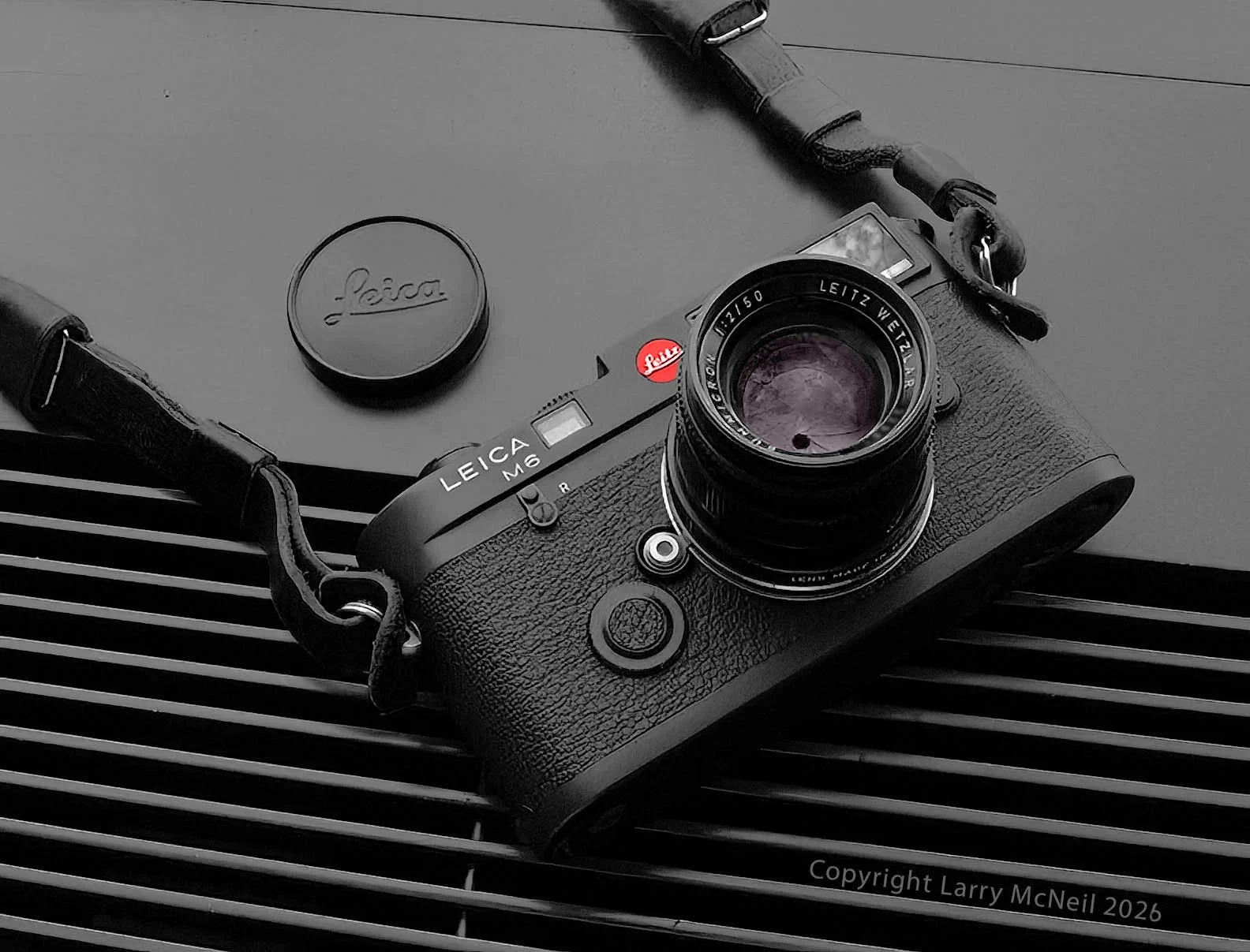
As I recall, this first batch of 1984 M6 bodies costed about $1,700.00 with the 50mm Summicron f/2. But even at that, it was pricey, quite a bit more than the excellent Nikon flagship F3 (w/lens) at around $850.00 in 1984. A cool new red dot was set loose.
Let’s see… what was happening in 1984? Computers were becoming consumer items for the first time and it felt completely natural, like it had happened all the time. Apple Computer released a TV commercial that spoofed the “1984” dystopian novel. The Super Bowl commercial celebrated personal computers for consumers, snubbing its nose at Orwell and his downer vibe.
Adobe Photoshop wouldn’t be released for another few years but there were already early indications in 1984 that photography may possibly go digital. Especially when highly sophisticated digital electronic components had already started appearing in film cameras by the mid-1970’s, such as the Minolta XE-7.
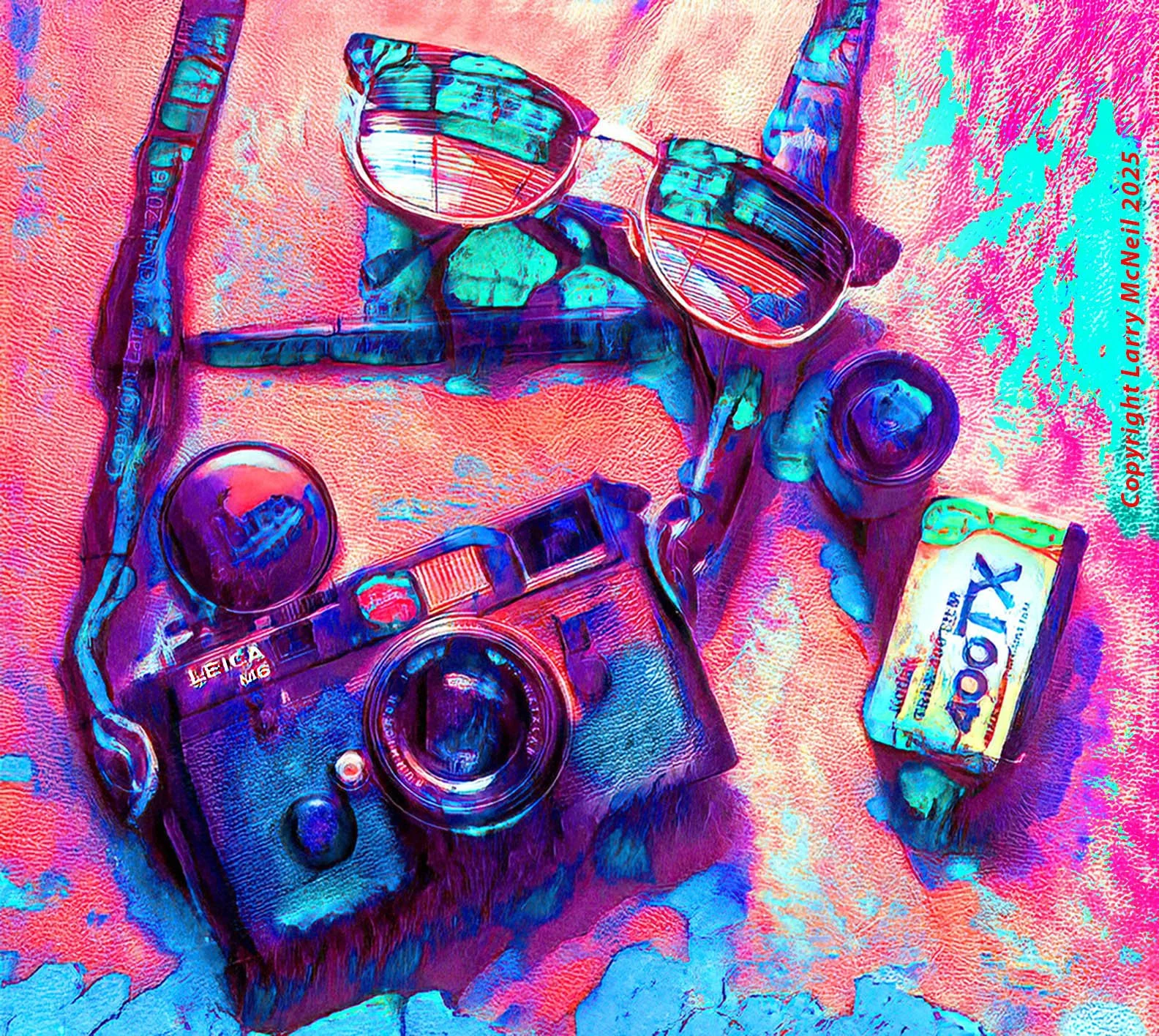
It’s also worth mentioning that in 1984, the year that the ultra-cool Leica M6 was released, the original digital camera (invented by Steven Sasson at Kodak) had been sitting locked away since 1975. The original 1975 digital camera may be viewed as a photography version of a Pandora’s Box, and Kodak kept it locked away from the public for years. The public didn’t know it existed. Critics could point out that this tactic gave film photography another decade of life, but who knows? All we know is that the M6 film camera was so good that it was rereleased in 2022 when digital photography had reached new heights with all its magic.
But let’s get in a Time Machine and take a quick peek at 1984 when the Leica M6 was first released. Getting the Leica M6 represented quite the leap of faith because the culture of photography was rapidly shifting to electronic and single lens reflex (SLR) photography. People were going all in with the simpler SLRs that had new, faster models being released every month.
Even though my M6 serial number is from the first 1984 build date, I couldn’t find any in 1984, and they weren’t really in camera stores until early 1985. For those keeping score, camera stores were still selling the Leica M4-P for around $1,450 with a 50mm f/1.4 . It was a good camera but I held out for the newer M6.
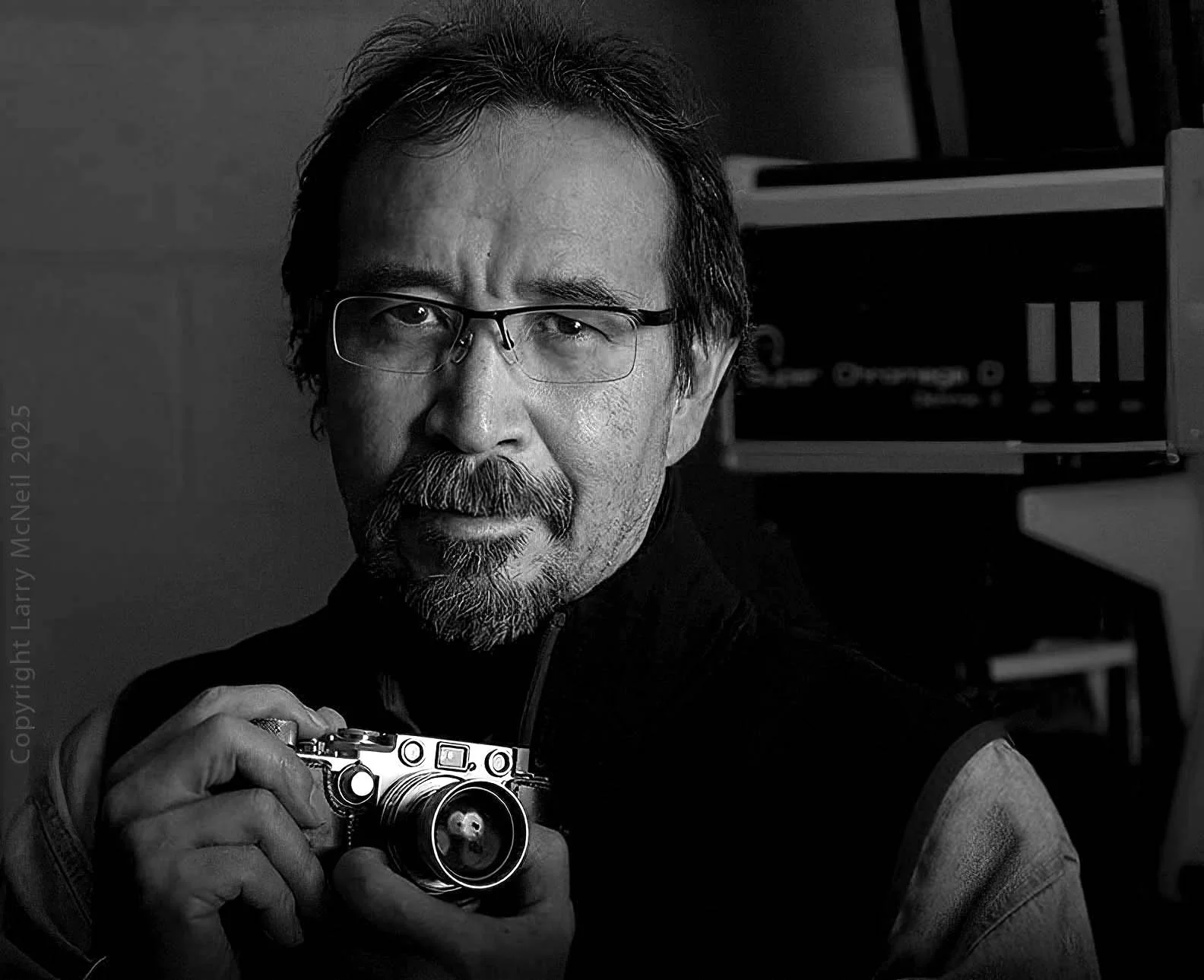
Regarding holding out for the M6, I’d been using the Leica rangefinders since photo school and was instantly hooked. The IIIF was cheap enough for students at $250, and with our new photography educations, using the Leica was far easier than the large format 4x5 cameras we were commonly using. Leicas are stealth silent and their design encourages you to be more thoughtful with your compositions.
The Leica rangefinders had already earned a solid reputation amongst photojournalists for people and street photography. The IIIF has a brilliant design where the lens slides into the body and it becomes a true pocket camera. I still use the IIIF, especially when I feel like getting back to the roots of photography.
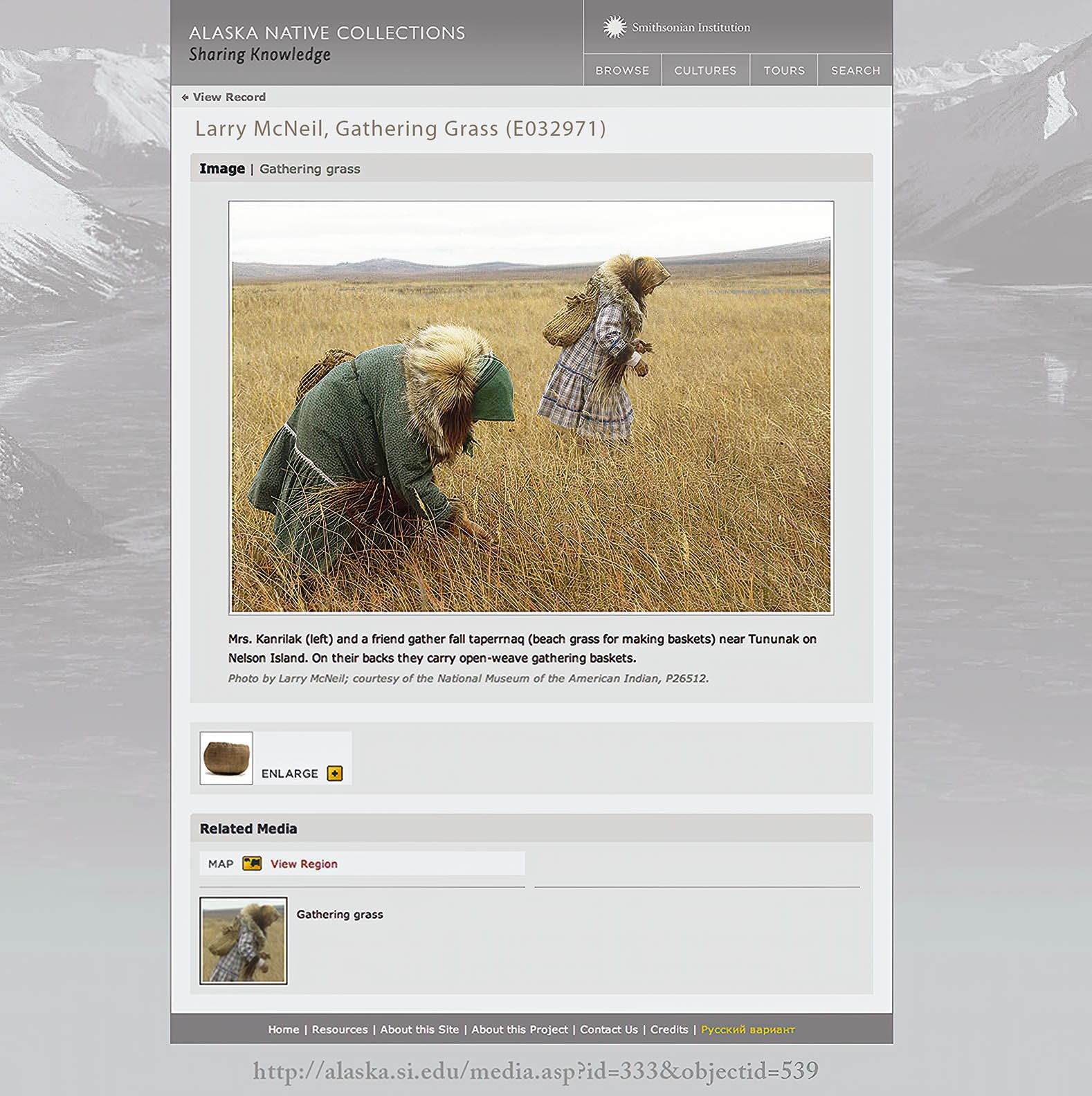
I used the Leica IIIF for this series in the early 1980’s in Western Alaska and could only dream about the secret M6 over the horizon. Don’t let the warm feeling fool you, it was freezing cold just before the snow started flying. The Leica was nearly completely silent and not distracting to people. Everyone was deep in thought and working briskly.
When I fired my Nikon F2, it was too loud and they’d often pause in their work to look at me instead of the grass they were so carefully picking. The Nikon got put back in my bag and I pulled out the Leica and that was that. This is at the core of why the rangefinders earned their keep with pros. They filled a niche where SLRs failed and fell right on their faces. Silence is good. Awesome in fact. Since I’d been using this IIIF for years it was second nature and looking at the scene, I was visualizing the horizon becoming blurred, so I shot wide open and adjusted the shutter speed accordingly. Mechanical aperture priority “was a thing” long before electronics showed up.
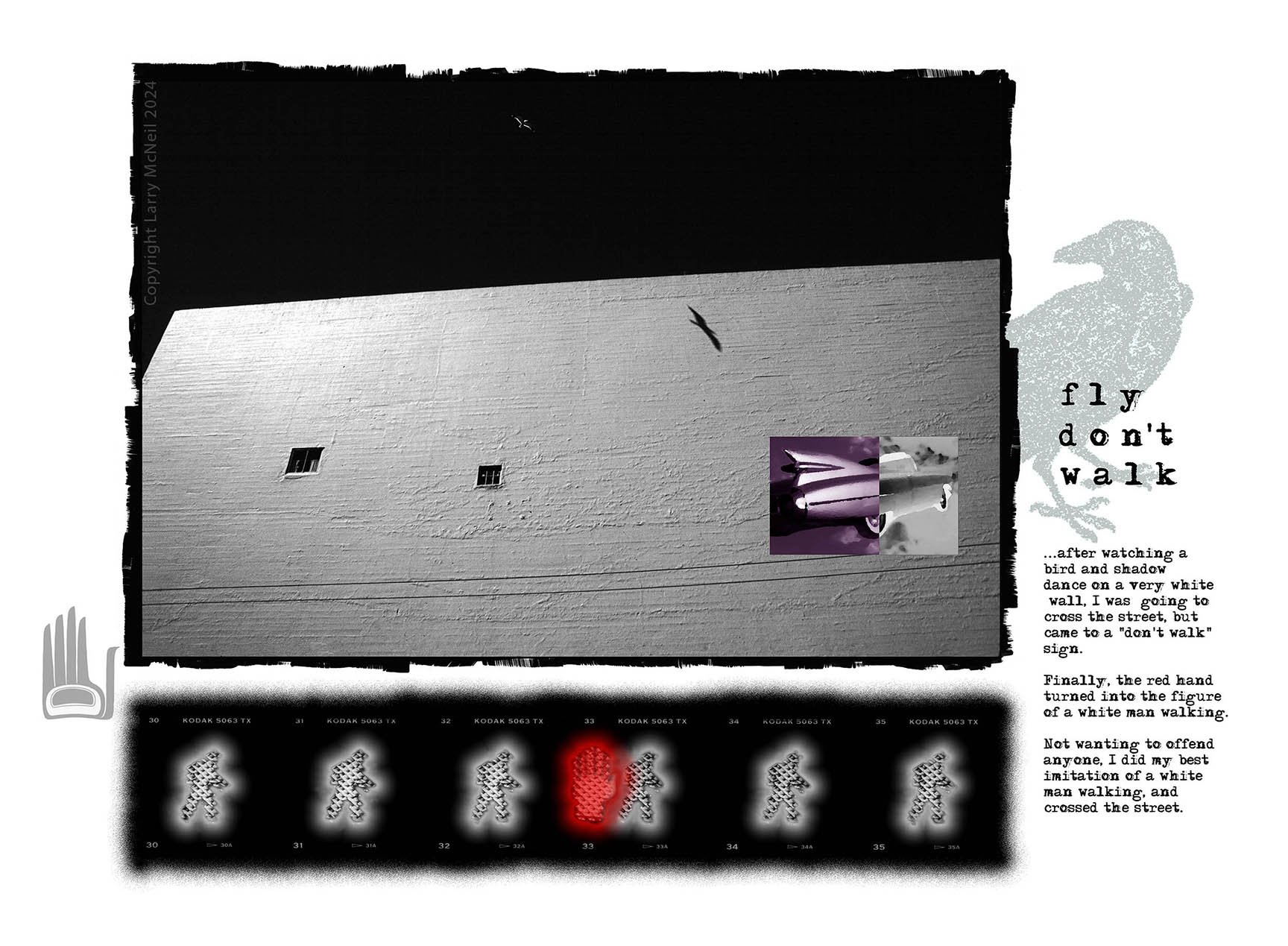
We’re going all over the place in time and this is now 1987 San Francisco with the still fairly new M6 instead of the IIIF. I still love doing street photography and this was a scene I saw often after departing a BART station on lower Market Street. This is titled “Fly don’t walk” and was amongst the first photos I made with the M6 in San Francisco.
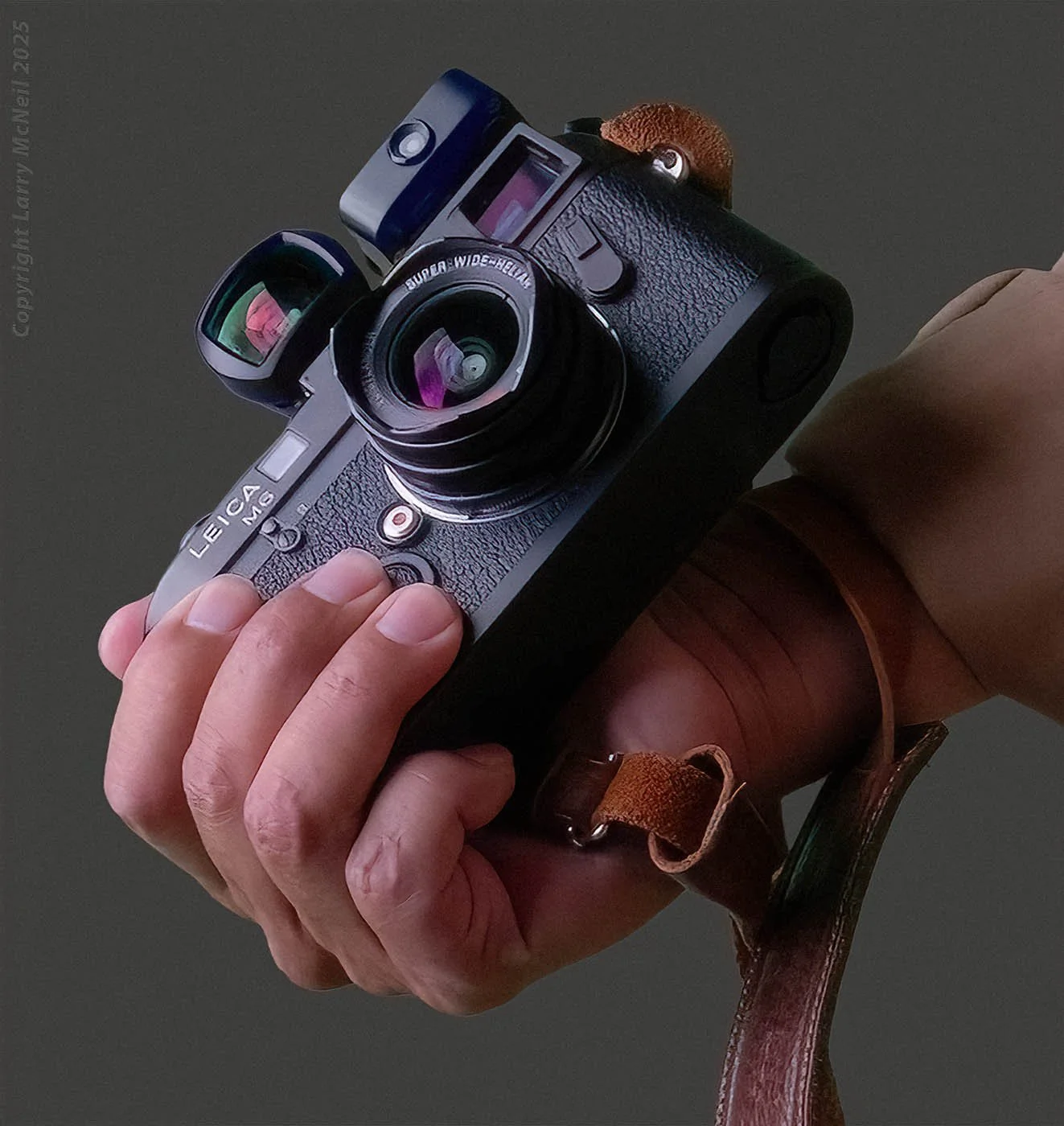
As a street photographer I like to keep the camera at the ready and in the midst of fast shooting I wrap the neck strap around my wrist. It allows for fast shooting using your intuition to speed things up.
With zone focusing I often don’t even have to pause for focusing, especially with the wide and very wide lenses. My favorite lens is the 35mm f/1.4 Summilux because the view feels natural, like human vision.
I like how you don’t have to fuss with the M6 and because it’s so silent I can shoot off a number of frames in the street so fast that passersby often aren’t even aware I’m shooting. I often meter the scene ahead of time and have the mechanical aspects preset. You’ll like this, I turned this M6 into a point and shoot camera. Just point and shoot to capture fast moments.
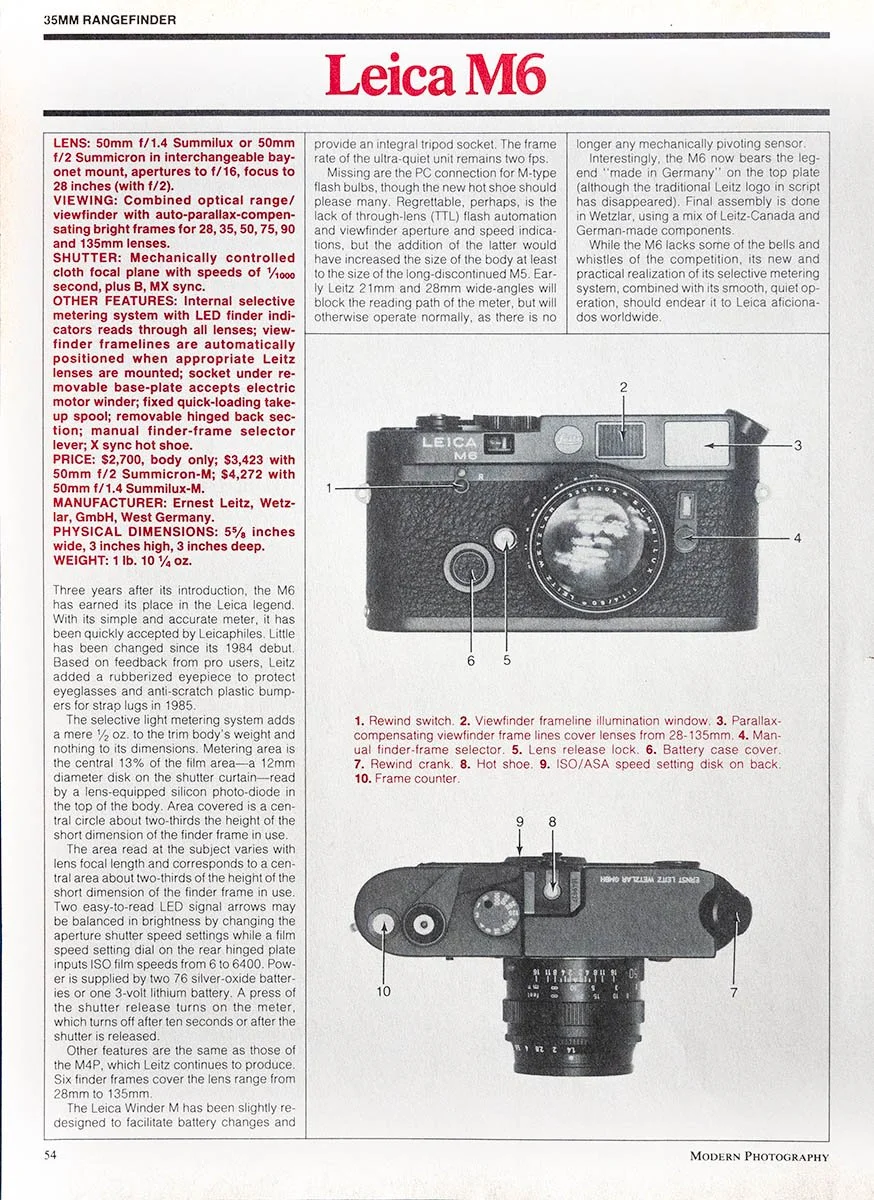
By a couple years later in 1987 the M6 was starting to become noticed by more pros and photo enthusiasts. Modern Photography featured it in a small spread and described it well, except the projected price of $2,700 was a little high. The price made the actual leap to $2,300 (the 50mm f/2 was $650 and the 50mm f/1.4 was $1,500). You could get the M6 with a 50mm f/2 for just under $3,000.00.
This marked the moment that Leica’s M6 cameras and lenses kind of morphed into the higher priced 35mm cameras. That was ok by me if that’s what it took for Leica to survive, but it also started making common lenses rare, which was a little peculiar because we photographers wanted to keep them common as regular work gear.
I like how Leica deliberately kept the M6 essentially the same for years, resisting changes that would’ve changed the character too much. Why change such a great design?
Lots of us continue to use the M6 because of how it was originally designed in 1984. It’s really great that a new younger generation of photographers have been drawn to the M6. It is the twenty-somethings who now buy the most film of any demographic and that’s just plain cool.
As a pro shooter I was already using the Hasselblad system for a lot of jobs and the Cambo system for large format 4x5 studio work. Nikon was by far my most commonly used ‘35 system because it was the most versatile and had the widest selection of lenses. It was impossible for most professionals to stay with just one brand. We had different brands for different purposes. For me the lineup also included the Leica rangefinders because they could do what other cameras couldn’t.

This is titled “Dad” (from the early 2000’s) and is typical of the visual aesthetic I sometime use. I make visual narratives based on journals. I was still shooting lots of Kodachrome film because of the rich color saturation and impeccable sharpness. Capturing fast moments and doing thoughtful compositions was still very important.
I like to take the M6 out in the elements when it’s raining or snowing. It is still very much a work camera, not just something for collectors to keep in a glass case. It is still a great camera to capture interesting portraits because it’s easy to move in close and fire off a lot of variations easily. It is over before most people realize that lots of shots were made.
I bring a studio strobe on location for some work and can get very accurate readings with a flash meter. The M6 works well with studio lighting, and all I do is place the remote trigger on the hot shoe and synchronize it with the shutter speed. That part has become fast and intuitive too, which is great because it allows me to concentrate on the creative compositions as opposed to techie stuff. This process is especially useful while shooting digital and film simultaneously. I do like the idea of having the option of shooting film, even as I spend far less time in darkrooms these days.
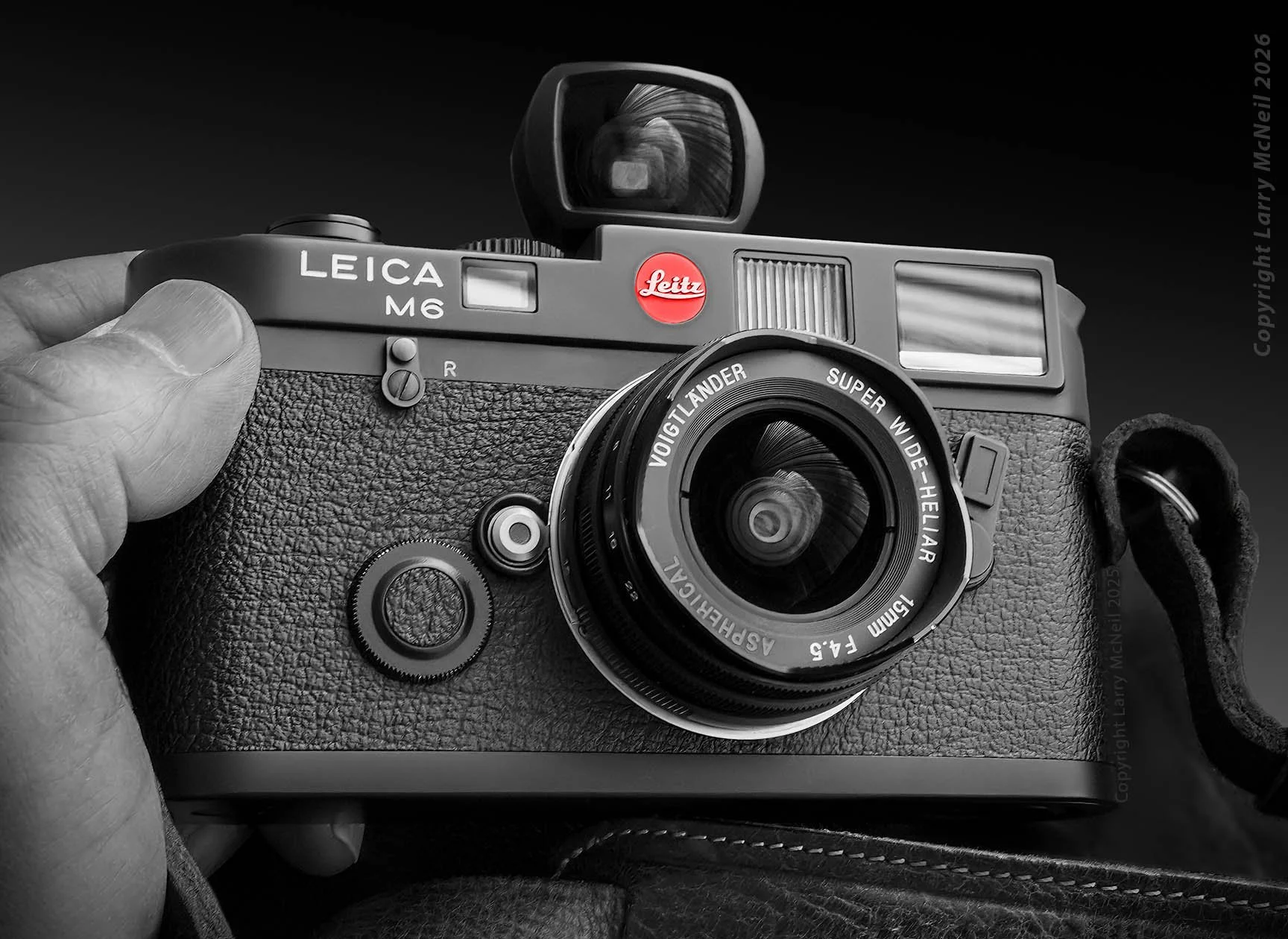
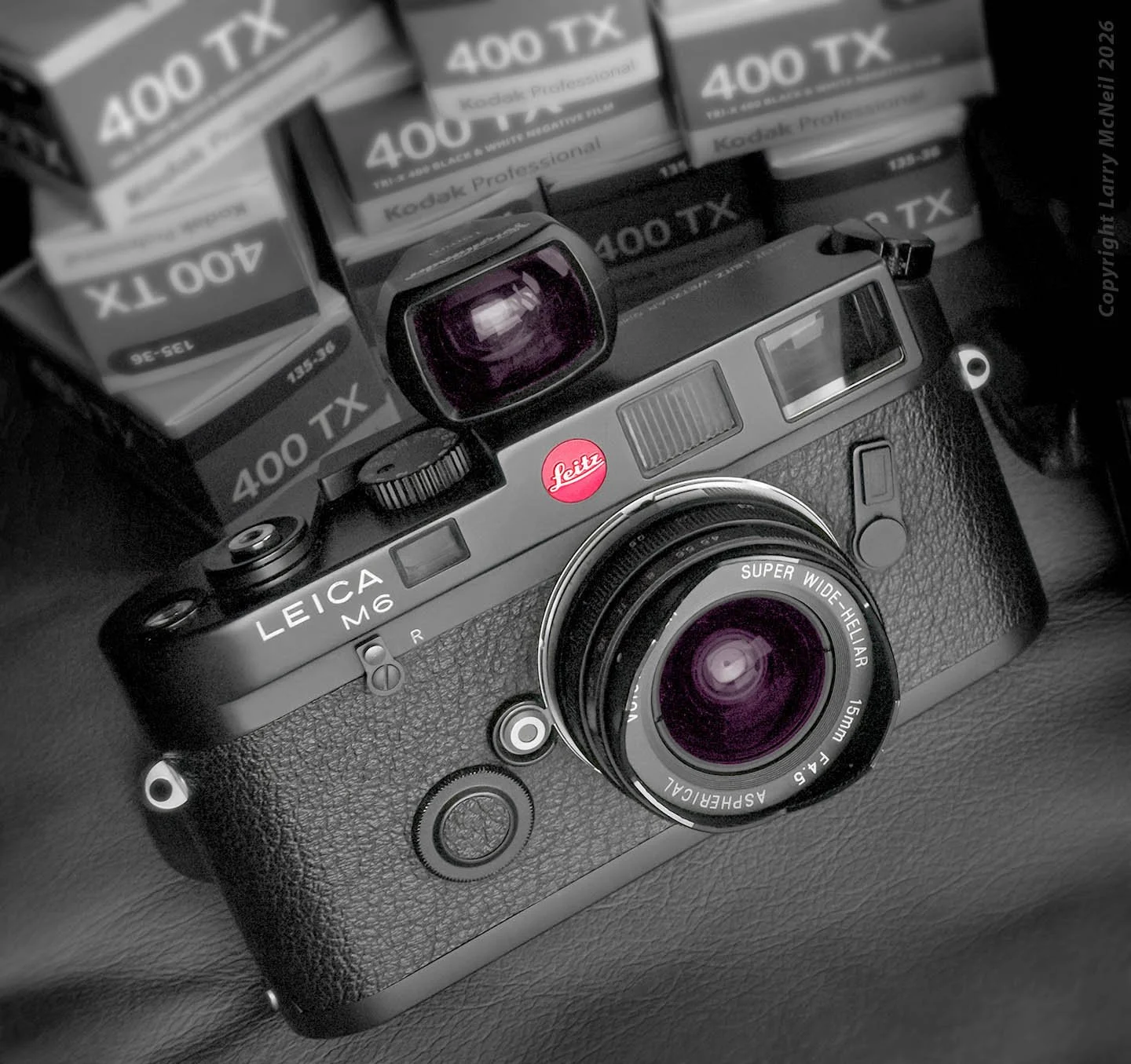
The 15mm is a superwide and is a lens that does take a bit of getting used to. I started out with the Nikon 14mm during the 2020 Covid lockdown. It was when we were all going stir crazy. I got the lens to try something new and liked it so much that I got a superwide for the M6 too, and now it pretty much lives on the camera.
The 15mm is a great available light lens and when you stop it down to F/8 you hardly have to focus because it has such a deep depth of focus. It was so much fun that it was the only camera I used for abut a month. In the midst of Covid I found myself using lenses that I’d largely ignored but always wanted to try.
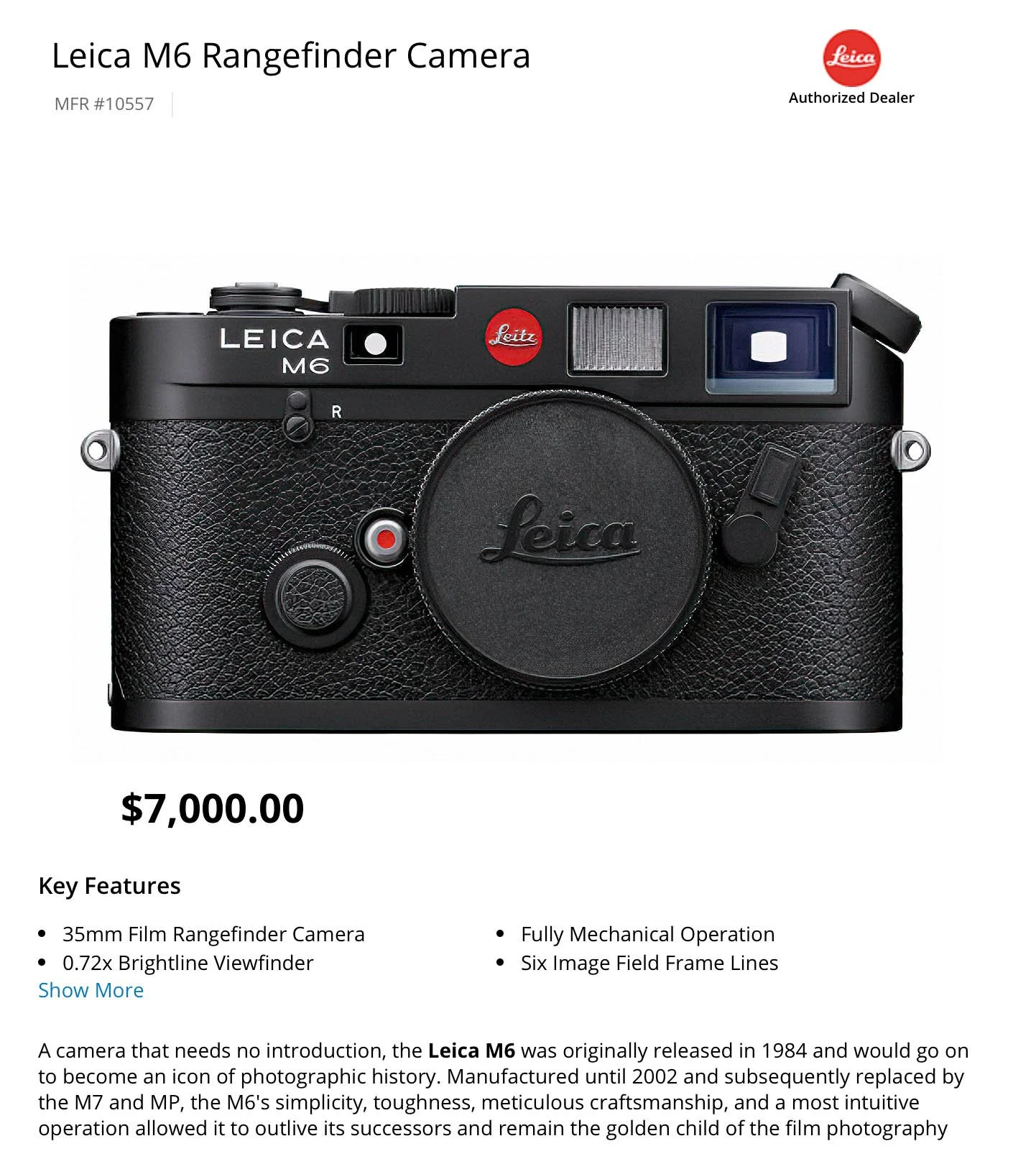
What’s interesting is that the M6 stopped production in 2002, but against all odds, was revived in 2022. Production stopped in 2002 because digital cameras were replacing film cameras.
With the new 2022 version of the M6 very little was changed except for an improved light meter, top cover made of brass (instead of a zinc alloy), and black lacquer instead of chrome. How many other cameras are so iconic that they’re revived twenty years later?
The updated M6 costs $7,000 as of today. Contrast that with the $1,700 I paid in 1984, which would be around the equivalent of $5,350 with inflation. It does my heart well to know that an exceptionally well built film camera is built now in the age of digital photography. That’s hope, but I know my students couldn’t afford it. But that’s all right because when I was a student I couldn’t afford the best cameras yet either. It was a dream to strive for.
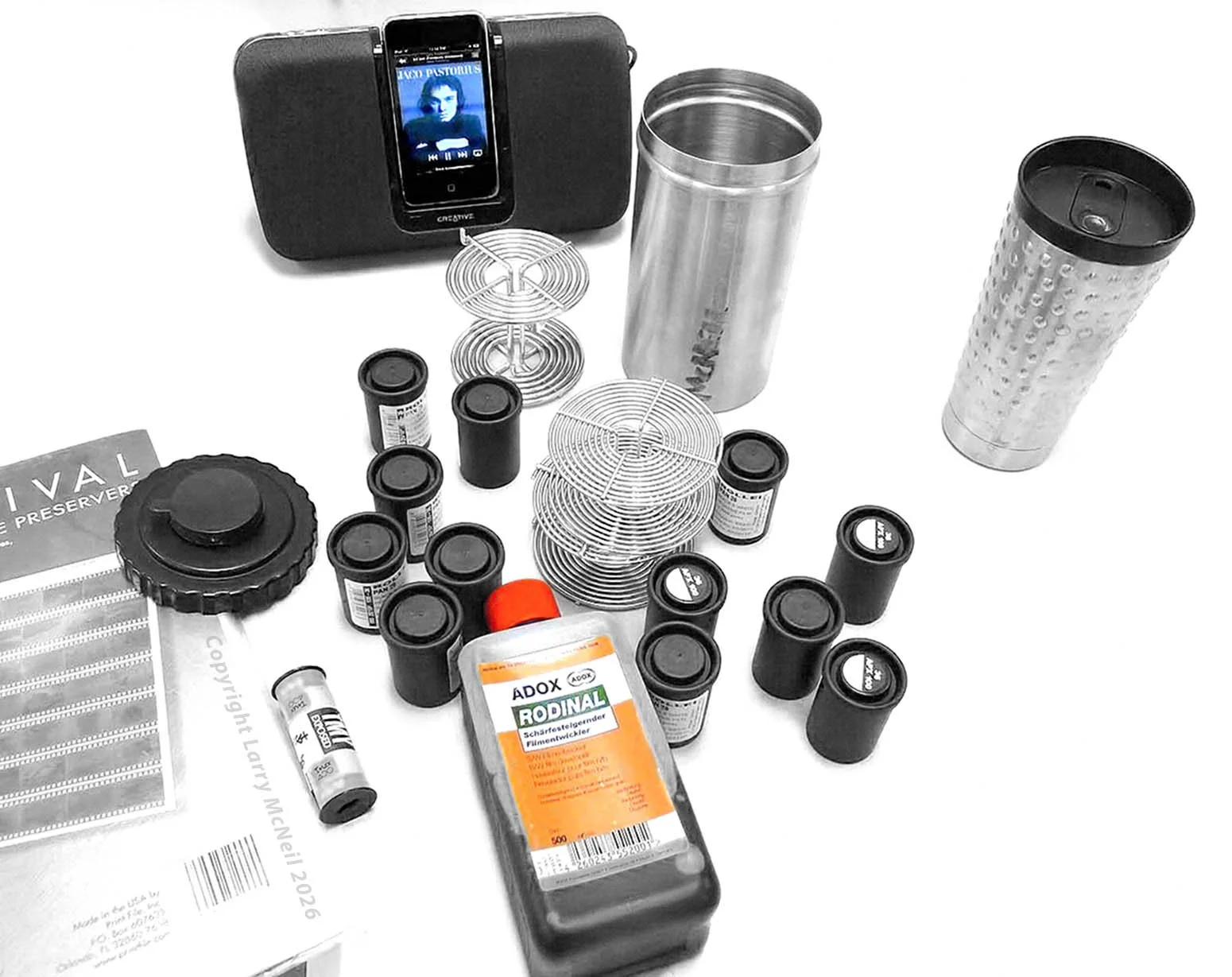
In the midst of the culture of digital photography I still shoot with film because there’s an element of skill and artistry that may be applied with how you expose and process your film. You may get a style that’s unique to your compositions. Same with making darkroom prints. There’s still something magical about how your negatives interact with various darkroom papers combined with a style of printing that may be uniquely your own.
Silver darkroom prints look different than digital prints because the paper emulsion has a depth that inkjet prints lack. Darkroom papers have layers, and some papers have a higher degree of silver which gives it an extended dynamic range. That means slightly more detail in shadows and highlights.
This brings us full circle back to the M6. In July of 2026 my M6 will be 42 years old. I can hardly believe it. That’s worth a party, right? Our rarefied first 2,000 Leica M6 cameras were the ones that broke the ice to prove that these M6 rangefinders were worth busting the piggy bank. The first batch of Leica M6 bodies went from serial numbers 1657251 to 1659250.
It reminds me that when I walked out the door with my used Leica as a young student it was 1975, and Leica was celebrating its 50th Anniversary. And 2025 was Leica’s 100th anniversary, which was especially notable for me because I joined the Leica users at the half way point.
I’ve got 7 rolls of film to process from the M6 and can’t wait to see them. I’m going to use my time honored Agfa Rodinal developer but that’s another story. Cheers.
All Content Copyright Larry McNeil 2026, All Rights Reserved. Permission must be granted for reproduction.