
Leica 100th Anniversary “Gotcha questions”
December 31, 2025
Capture the moment or carefully compose?
Larry: ‘Capture the moment’ because we can’t put life on pause. Well most of us can’t, so we wing it with our cameras and do what we can. Shoot some quick sequences and cross our fingers that we got it.
On the other hand, we all carefully compose whether we admit it or not. Even when we only have a second to capture and create the image. I’d assert that the compositions are how we perceive, and how we visually emphasize what we see. We’re saying something with our photographs, and the only way to do that is to compose it.
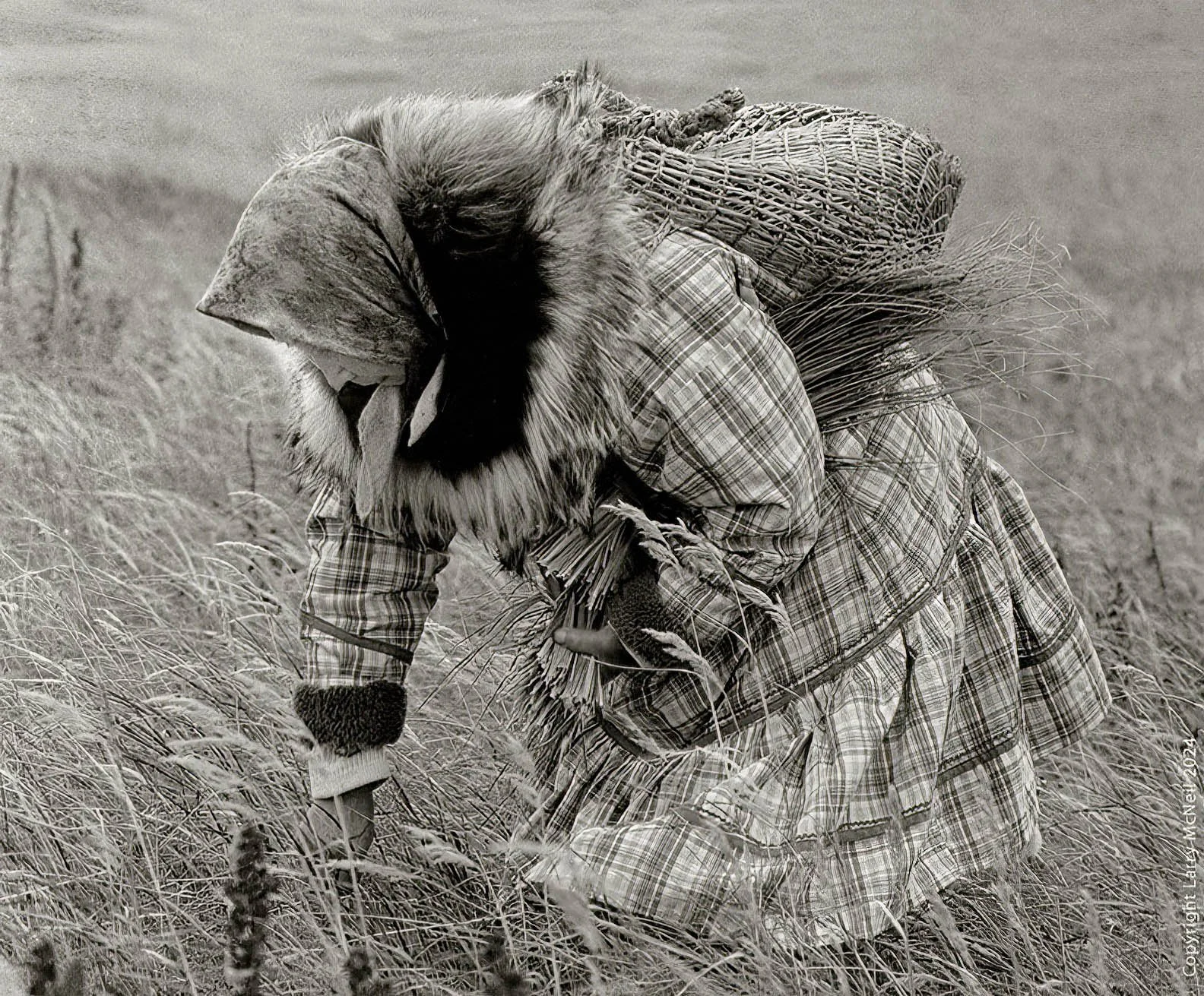
I absolutely love shooting with the Leica IIIF because the 50mm lens is sharp and using it becomes fast and intuitive. I can quietly step in closer and not bother the people I’m photographing. This was not long before the M6 was released and I’d been using this IIIF since the start of photography school, so I was very attached to it and knew what it could do. For this composition I wanted a shallow depth of field with the background blurred and Mrs. Kanrilak sharp. That’s where f/2 comes into play with capturing the moment.

Capturing the moment means seeing precisely how we do it. Leica has what feels like a lens for the ages, a 50mm Summitar f/2 (fairly fast for 1955). The Ernst Leitz engineers (Oskar Barnack?) designed a lens that was optimized for high quality negatives and making it compact for travel. Capturing the moment means being on the road, and the innovative lens slides into the camera body when you put it away. That’s timeless innovation. I was shooting a lot of the newly improved Kodak Ektachrome E-6 film in the early 80’s and being able to shoot at f/2 in dim light made this camera and lens combination good for continued use, even as more modern cameras were available.
In 1975 I used the Leica IIIF for school assignments because I wanted to learn photography with a classic camera. It took a bit of practice to get used to the rangefinder, but I liked how it slowed down your shooting style and you had to be more careful with your compositions. It harmonized with our new way of using mindfulness with our creativity with learning photography.
One lens for the rest of your life, which one?
Larry: The 35mm because it closely matches how we see the world. The perspective matches our natural vision and it feels right. I shot with the Leica R3 for years because it could make exposures so precise that even the fussy Kodachrome was correct with the Copal shutter and light meter. As a studio shooter we got used to a “normal lens” because the perspective is natural for accurate views, but I do a lot of photography outside of the studio too, which is when the 35mm essentially lives on the main camera. Yes, definitely the 35mm because it is on the wide end of the “holy trinity” (wide, normal and short telephoto) of prime lenses. A lot of my well known photographs over my career were made with the 35.
Color or black and white?
Larry: I instinctively return to black and white all the time and likely shot more b&w film in my life than color. It’s poetic and forgiving. I’ve lost track of all the b&w I’ve shot with the Q2 Monochrom the past couple years. A million shots? Something like that. A lot, more like 1.2 million exposures with this cool camera. The highest priced photo I’ve sold was a b&w palladium portrait. On the other hand, I keep shooting color (with other cameras of course) hoping to match the magic of Kodachrome, but we’ll see. I seem to go in phases of b&w for a couple of years with very little color shot.
Do you think gear matters?
Larry: That’s a yes & no answer because a gifted photographer’s super powers comes from their heart and soul, not the camera they’re holding. On the other hand, there ain’t nuthin’ like a sharp lens and well- designed camera to make your heart beat a little faster. With Leica I’ve been using the M6 since it was first released in 1984 and it has stood the test of time. In 2024 I was taken by the idea of using a dedicated digital camera for b&w and got the Q2M Monochrom and have been using so much that it has become my most used camera. I’d say that we finally have a digital camera that can match b&w film and I’ve been waiting to say that for 30 years.
Who’s your inspiration?
Larry: Lee Marmon for helping break a path for future Indigenous photographers and for finding beauty in the chaos. Eugene Smith for his poetic sensitivity to light with capturing brutal war scenes and environmental chaos. Imogene Cunningham and Edward Weston from the sassy Group F/64 for living by their wits to flush old ideas down the tubes. Margaret Bourke White dominated photojournalism in the 20th century and inspired people like George Lucas with his view of the planet Coruscant, and her view looking down at the skyscrapers of New York City with a silver DC-4 flying opulently in the foreground.
What’s your most memorable moment in photography?
Larry: Driving through the December snowflakes on old Route 66 in New Mexico and unexpectedly coming upon an offbeat scene that was simultaneously amusing and culturally relevant. It was a wall sized 1930’s tourist sign that asserted “REAL INDIANS” were here, beckoning tourists to come off the road and browse the wonders of the Southwest. It inferred that the tourists have been only meeting fake Indians up to now, and to prepare themselves for the real deal. That one photograph changed my life forever and allowed me to go rogue with photography and to break rules while still being assertive. It still breaks the ice and helps me find my way.
Any advice for young up-and coming photographers?
Larry: Follow your instincts with compositions and content, don’t think too hard in the moment. The creative process is fleeting and slippery, it wants to get away and you’ve got to affirm and hold fast to your personality and character with your creative work. That’s another way of saying “be your authentic self” because this will always be your best work. Keep making work no matter what, especially when you’re in survival mode and are struggling. Don’t give up when things get tough. Listen to the advice of others but know when to follow your own path. Mentors are good to find, as is interacting with other creatives. Have fun experimenting and try something unexpected and if it looks bad, so what? Learn from what doesn’t work too, that’s also an important part of the process, to crash and burn.
The hockey player Wayne Gretzky had the perfect saying that applies to photographers too; “You miss 100% of the shots you don’t take.” Take the shot. Or if your process is a little more studied, make the shot. Build it from scratch if that’s your path. Enjoy the journey.